
 Canada
 United States
 United Kingdom
 Australia
 UAE
UAE Morocco
 Nicaragua
 Colombia
 Venezuela
 Bolivia
 Paraguay
 South Africa
 Pakistan
 Philippines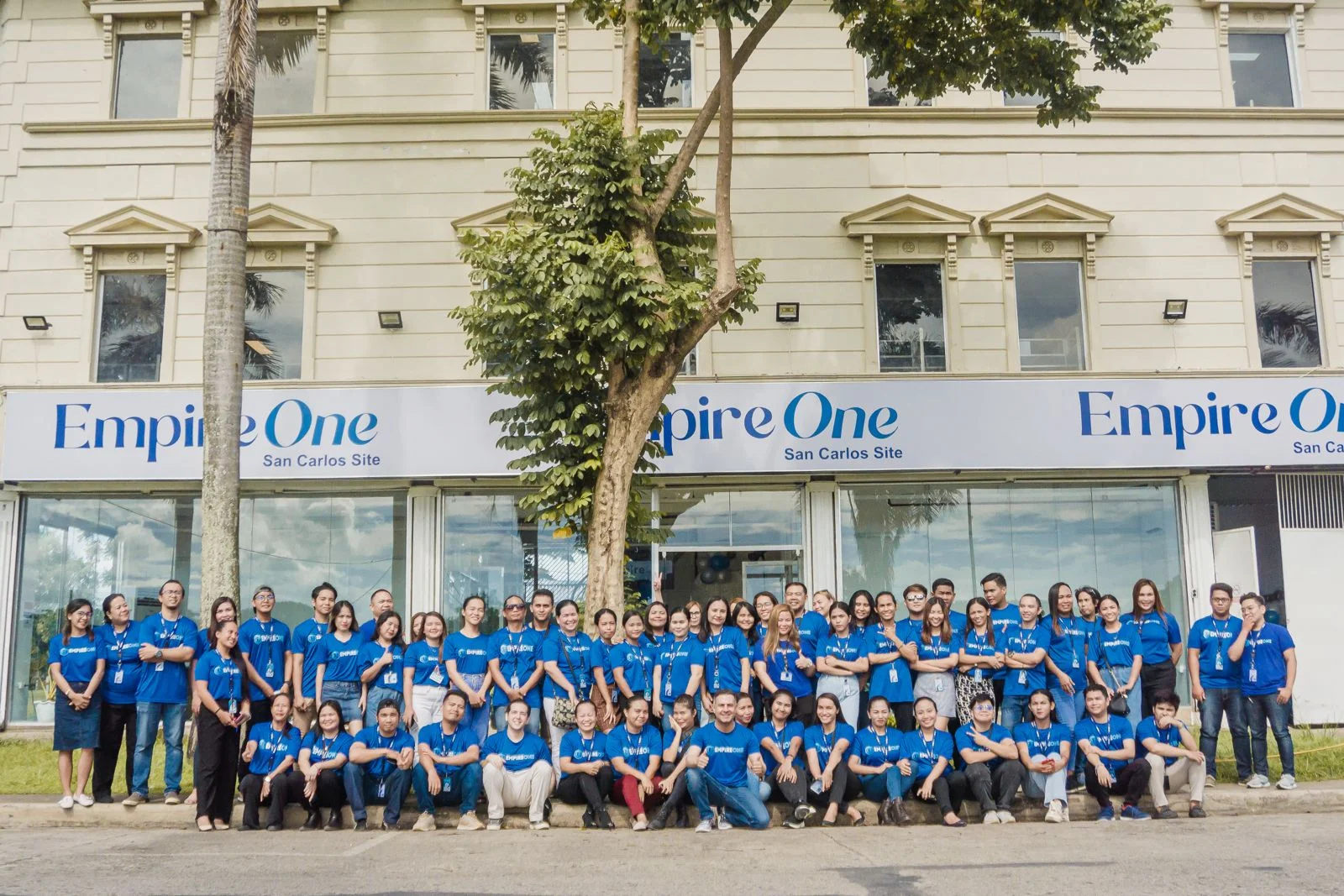
Quick Answer: Dedicated vs Shared BPO Teams
Typically, when you outsource customer support or back-office operations through a BPO partner, you choose between two staffing models: a dedicated team that works exclusively for your brand, or a shared team that handles multiple clients simultaneously.
Typically, dedicated BPO teams offer deep brand immersion, consistent quality, and full operational control. Typically, shared BPO teams offer a lower entry cost and flexible capacity, making them practical for businesses with lower or variable contact volumes.
Neither model is universally better. The right choice depends on your contact volume, complexity of interactions, brand standards, growth trajectory, and budget constraints.
What Is a Dedicated BPO Team?
A dedicated BPO team is a group of agents, team leads, and quality analysts assigned exclusively to your account. They do not handle inquiries for any other client. Their entire operational focus, training, performance measurement, and scheduling is built around your brand, your products, and your customers.
This is the outsourcing equivalent of building your own support department, except the infrastructure, hiring, HR management, and workforce technology are owned and operated by your BPO partner. You get the control of an in-house team with the operational efficiency of an experienced outsourcing provider.
Dedicated teams are the standard engagement model for customer experience outsourcing at any serious scale, and they are the model EmpireOneCX builds for every client.
How a Dedicated BPO Team Works
Your BPO partner recruits, hires, and trains agents to your specific brand standards. Those agents learn your product line, tone of voice, escalation paths, CRM, and quality benchmarks. They show up to work every day as an extension of your brand, not as a shared resource pulled in different directions.
Dedicated teams typically include:
- Front-line agents handling your customer interactions across defined channels.
- A team lead or supervisor managing daily performance, coaching, and escalations.
- A QA analyst monitoring interactions, scoring them against your rubric, and feeding improvement data back to the team.
- An account manager serving as your strategic point of contact for reporting, staffing, and operational decisions.
Dedicated vs Shared BPO Teams: A Direct Comparison
| Factor | Dedicated Team | Shared Team |
|---|---|---|
| Agent exclusivity | Agents work only for your brand | Agents split time across multiple clients |
| Brand knowledge depth | Deep, specialized, continuously refined | Moderate, maintained across multiple brands |
| Cost structure | Fixed monthly cost based on headcount | Variable cost based on volume or hours consumed |
| Quality consistency | High; team is aligned entirely to your standards | Variable; dependent on availability and routing |
| Customization | Extensive workflows, tone, escalation paths, and QA | Limited by shared operational frameworks |
| Best suited for | Mid-market to enterprise, complex CX, consistent volume | Startups, low volume, seasonal peaks, transactional interactions |
The Real Cost Difference
Cost is the most common reason businesses default to a shared team, but the comparison is more nuanced than it first appears.
Typically, shared teams have a lower entry price. Because agent time is distributed across multiple clients, the per-hour or per-interaction cost is lower. If your monthly contact volume is modest, paying only for what you consume makes financial sense.
Typically, dedicated teams have a more predictable and often more favorable total cost of ownership at scale. When your volume reaches the point where shared agents are handling your interactions for the equivalent of one or more full-time agents, a dedicated model becomes more cost-efficient. You gain consistent availability, deeper expertise, and higher quality without paying premium consumption rates.
Typically, businesses outsourcing customer support through a BPO partner can reduce operational costs by 20% to 60% compared with building an equivalent team in-house, regardless of the model. The dedicated vs shared question determines how that saving is structured, not whether it exists.
The hidden cost of a shared model is quality inconsistency. When an interaction goes poorly because an agent lacked brand context, the downstream cost in lost customers, negative reviews, and churn is difficult to see in a line-item budget but very real in practice.
When a Dedicated BPO Team Is the Right Choice
A dedicated team is worth the investment when any of the following conditions apply.
Your brand voice and product knowledge are differentiators. If the quality of your support interactions directly reflects on your brand reputation, agents who handle your customers and only your customers will always deliver a more consistent, informed experience than those split across multiple accounts.
You are handling complex or high-stakes interactions. Technical support, healthcare-adjacent communication, financial account management, or any scenario where customers have high expectations and low tolerance for generic responses requires deep product familiarity that only a dedicated team can develop over time.
Your contact volume is consistent and substantial. If your team would be handling hundreds to thousands of interactions per month, dedicating agents to your account is operationally more efficient and produces better quality outcomes.
You need full operational transparency. Dedicated teams generate performance data that belongs entirely to your account. You can see individual agent scores, interaction trends, CSAT by channel, and volume patterns with precision that a shared model cannot replicate.
You are scaling fast and need reliability. Growing brands heading into new markets, product expansions, or high-volume seasons need a team that grows with them in a structured, accountable way.
The Hybrid Model: Best of Both Worlds
Many mature BPO engagements eventually evolve into a hybrid structure. A core dedicated team manages your standard volume with full brand immersion, quality discipline, and operational continuity. Shared capacity from the broader agent pool absorbs overflow during seasonal peaks, unexpected volume surges, or campaign launches.
This model is particularly effective for e-commerce brands managing holiday demand, SaaS companies handling spikes around major product releases, or any business where volume is predictable most of the year but difficult to staff for at its absolute peak.
The key to making a hybrid model work is clear queue routing logic, consistent training across both pools, and a QA framework that monitors shared-agent interactions with the same rigor applied to your dedicated team.
How Team Structure Affects Customer Experience
The staffing model you choose has a direct effect on the customer experience your brand delivers. This is not an abstract concern. It shows up in measurable metrics.
- First Contact Resolution: Dedicated agents who know your product deeply are more likely to resolve interactions in a single touch.
- Average Handle Time: Dedicated agents familiar with your systems, policies, and common scenarios handle interactions faster without sacrificing quality.
- CSAT and NPS: Typically, customer satisfaction scores trend higher when the experience feels coherent, knowledgeable, and on-brand.
- Escalation Rate: Dedicated teams reduce escalation friction because expertise is distributed across the team from day one.
The benefits of outsourcing customer support are fully realized when the outsourcing model is matched correctly to your operational needs.
Questions to Ask Before Choosing a Model
Before committing to a dedicated or shared engagement, work through these questions with your prospective BPO partner.
- What is my monthly contact volume, and how much does it vary? Stable, substantial volume points toward dedicated. Low or highly variable volume points toward shared or hybrid.
- How complex are my customer interactions? Complex technical, emotional, or brand-sensitive interactions belong with a dedicated team.
- How important is brand consistency? If support quality is part of your brand promise, the consistency of a dedicated team is worth the investment.
- What is my growth trajectory over the next 12 months? If you are scaling aggressively, a dedicated team can grow with you in a structured way.
- What level of reporting do I need? If you want granular performance data, dedicated teams provide this in a way shared pools cannot.
The EmpireOneCX Approach
At EmpireOneCX, we build dedicated, AI-assisted support teams for brands that take customer experience seriously. Our model is not based on splitting agent attention across clients. Every team we build is recruited, trained, quality-monitored, and optimized around a single brand.
We combine structured human operations with AI-assisted analytics, intelligent routing, and continuous QA to deliver the kind of consistent, high-quality customer experience that shared pools are structurally unable to produce at scale.
Whether you are moving from a shared arrangement that has stopped scaling with your business, launching your first outsourced support function, or rebuilding a team that has not been performing, we can design an engagement model that matches your volume, brand requirements, and growth plans.
Book a 15-minute call to discuss your support structure.
Related Reading
Frequently Asked Questions
What is the difference between a dedicated and shared BPO team?
A dedicated BPO team works exclusively for your brand. A shared BPO team splits agent time across multiple client accounts. Typically, dedicated teams deliver deeper brand knowledge, higher quality consistency, and more transparent reporting. Typically, shared teams offer lower costs and greater flexibility for lower-volume engagements.
Which BPO model is better for customer experience quality?
Typically, dedicated teams produce stronger customer experience outcomes, including higher CSAT, better first contact resolution, and lower escalation rates, because agents develop deep familiarity with your product, brand, and customer base over time.
Is a dedicated BPO team more expensive than a shared team?
Typically, dedicated teams carry a higher baseline cost because you are paying for exclusive headcount rather than shared consumption. However, at sufficient volume, the quality advantages and per-interaction economics can justify the difference.
When does a shared BPO model make sense?
Shared BPO models are most practical for businesses with low or highly seasonal contact volumes, simple and transactional customer interactions, or teams exploring outsourcing before committing to a full dedicated engagement.
Can a business use both dedicated and shared BPO teams?
Yes. A hybrid model uses a dedicated core team for everyday volume and shared capacity for peak periods. This is common for e-commerce brands, SaaS companies, and businesses with predictable baseline volume but significant seasonal variation.